

Depression

This booklet shows what depression is, what it isn’t, and how to start on your journey to healing. Chapters include:
- Let’s talk about mental health: Depression is an illness, and it’s treatable.
- Depression questionnaire: How is depression affecting your life?
- Understanding your illness: Information from the National Institute of Mental Health (NIMH) about depression’s factors, types, and treatments.
- Beyond Treatment: A few things to try on your own.
- The spiral staircase to recovery: Why healing doesn’t happen all at once, and how to recognize your progress.
- Resources for your journey: These books, websites, and podcasts are a great place to start.
Anxiety

If worries are wearing you down, there is hope. Chapters in this booklet cover:
- No Condemnation: You don’t have to wonder if you’re hearing anxiety or God because of one big difference.
- Anxiety Questionnaire: Are worries trying to take over your life?
- What Does Your Score Mean: Understanding your questionnaire results and planning your next steps.
- Learning About Anxiety: Information from the National Institute of Mental Health (NIMH) about anxiety and types of anxiety disorders.
- Slow and Steady Wins the Race: Tips for managing your anxiety.
- Resources for You: Websites and information that you might find helpful.
Suicide/Harm

If you’ve thought of suicide or hurting yourself, help is just a call away. Chapters in this booklet cover:
- Your Life is Still Worth Living: It’s OK if you don’t see a way out right now. That’s what depression does.
- Getting Help For Suicidal Thoughts: You can learn to manage and find help for thoughts about ending your life.
- When You Feel Like Self-Harming: It’s possible to replace self-harm with a safer coping strategy. Here’s how.
- Creating Your Personal Safety Plan: Sit down with a therapist or a trusted friend to create this action plan for a suicidal crisis.
- #BeThe1To Help Someone: Find out how to help someone who is in emotional pain.
- Resources and People to Call: You’ll never have to feel alone again.
Getting Help
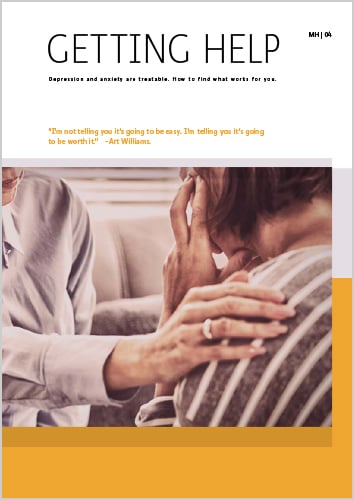
Depression and anxiety are treatable. This booklet shows how to find what works for you. Chapters cover:
- Professional help: It’s not as scary as it sounds. A conversation about seeking treatment for mental health.
- Finding safe people: How to spot someone who can help.
- Starting your treatment: Advice from the NIMH to make the most of primary care and mental health appointments.
- Talking to your pastor: What is pastoral counseling, and how can it help with your recovery?
- Treatment Resources: Information to help you find a mental health professional, a support group, or whatever you need for the next step.
Recovery Tools

This booklet covers things you can do to fight depression or anxiety, and start feeling better. Chapters cover:
- Body + Mind: Different kinds of health are all connected because you are one whole person.
- Taking Care of You: Looking after your physical health is huge. It might be just what your mind needs.
- Moving Your Body: Exercise can be intimidating, but don’t count it out. It makes all the difference in recovery.
- How to Get Better Sleep: Depression and anxiety can give you trouble sleeping. And when you are sleeping better, it’s often a sign that you’re starting to heal.
- Sleep Consolidation: A great technique for fighting insomnia.
- Finding Your Balance: Recovery tools are easier to manage when you set small, achievable goals.
- Resources for Recovery: Websites, organizations, and contacts you might find helpful as you heal.
Brain Training

Making new mental pathways that aren’t guided by depression and anxiety. This booklet covers:
- You’re Never Alone: Recovery can be a wild ride, but God’s with you.
- Identifying Negative Thoughts: Spot the lies depression and anxiety tell.
- Confronting Negative Thoughts: Once you’ve learned to spot harmful thinking, the next step is confronting those thoughts.
- CBT Strategies for Anxiety: These techniques might help to break the cycle of worry.
- Living in the Moment: Use mindfulness, or being in the present moment to overcome worries or negative thoughts about the past or future.
- Resources: More information about retraining your brain.
Staying Healthy

Recovery doesn’t end when you feel better. The next step is maintenance. Chapters in this booklet cover:
- Dare to be a Daniel – After Recovery: What to do once you start to feel better.
- How to Build Habits: Tips for moving into the maintenance phase.
- Making Space for Joy: Simple self-care tools. You’ve got your life back, now enjoy it!
- Beyond Treatment: A few things to try on your own.
- Managing Stress: Stress isn’t great for mental health. These tips from the National Institute for Mental Health will help you manage it better.
- Finding Community: Surrounding yourself with supportive friends is an important part of maintaining your recovery. Here are a few tips.
- Resources: These books, websites, and podcasts are a great place to start.